
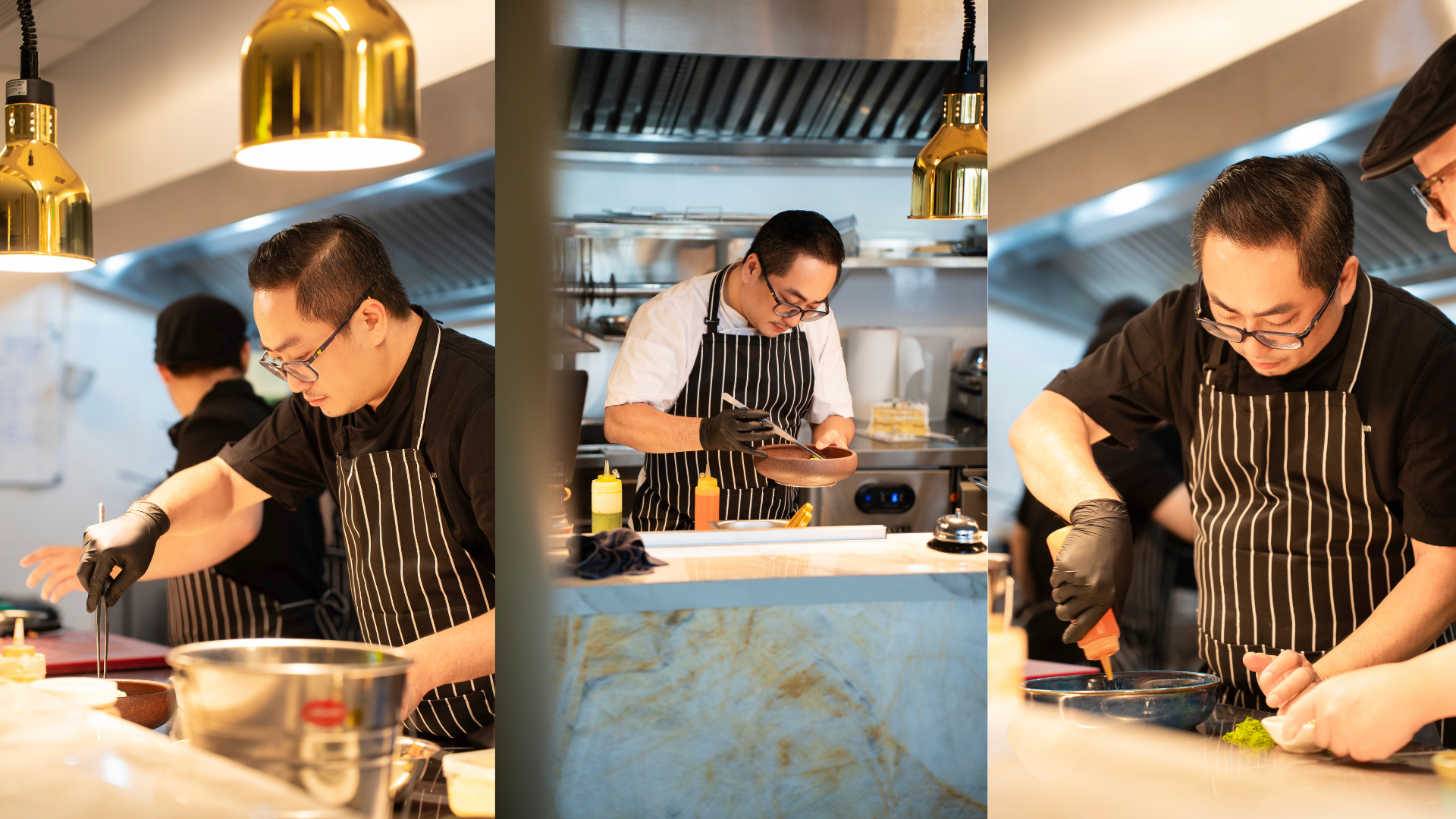
New Menu Development Service (R&D): The Key to Restaurant Success

In the competitive food and beverage (F&B) industry, a restaurant's success depends on more than a prime location, attractive interior design, or effective marketing. One of the most important factors influencing customer retention, brand differentiation, and revenue is the menu.
A menu is more than a list of dishes. It reflects a brand's identity, shapes the customer experience, and directly influences food costs and profitability.
That is why new menu development is a strategic investment, not simply a creative exercise. Through a structured culinary Research & Development (R&D) process, F&B businesses can develop distinctive dishes, standardize recipes, optimize food costs, and build menus that work in real kitchen operations.
At Tastemaker Hub, our New Menu Development Service helps restaurants and F&B brands transform culinary ideas into commercially viable menu concepts that align with their brand positioning, target customers, and operational capabilities.
1. What Is Culinary R&D and Why Does Your Restaurant Need It?

Culinary R&D, or Culinary Research & Development, is the process of researching, testing, refining, and standardizing recipes before introducing them into commercial food service operations.
While culinary R&D involves creating new dishes, its purpose extends far beyond innovation. A successful R&D process must balance flavor, ingredient availability, kitchen efficiency, consistency, and financial performance.
Key considerations include:
Flavor differentiation: Does the dish offer a distinctive taste that sets the brand apart from competitors?
Ingredient sourcing: Are ingredients consistently available, reliable in quality, and practical to manage?
Kitchen efficiency: Can the dish be prepared efficiently using the restaurant's existing equipment and workflow?
Food cost control: Does the recipe support the restaurant's target cost structure and pricing strategy?
Recipe consistency: Can different kitchen staff reproduce the same quality across shifts and service periods?
A dish may taste exceptional during development but become difficult to execute during peak service. Complicated preparation methods, inconsistent ingredient quality, and uncontrolled portion sizes can undermine both customer satisfaction and profitability.
A professional culinary R&D process helps businesses identify these challenges before launch, reducing avoidable operational problems and creating a stronger foundation for long-term growth.
2. Tastemaker Hub's New Menu Development Service

Tastemaker Hub provides menu development solutions designed around each brand's concept, customer expectations, and operational requirements.
Rather than focusing exclusively on creating individual dishes, our approach considers how the entire menu functions as part of a restaurant's business strategy.
Our New Menu Development Service may support:
New restaurant openings: Developing a menu aligned with the brand concept and target market.
Existing restaurant renovations: Refreshing menus to improve relevance, differentiation, and customer appeal.
Signature dish development: Creating distinctive dishes that strengthen brand recognition.
Signature sauce development: Establishing unique flavor profiles that customers associate with the brand.
Recipe standardization: Creating consistent preparation methods and portion specifications.
Food cost optimization: Reviewing ingredient quantities, yields, and recipe costs to support better cost management.
Menu expansion: Developing new dishes or product categories that fit the business's growth strategy.
Each project can be tailored to the restaurant's requirements, from developing selected signature dishes to building a broader menu framework.
Explore our New Menu Development Service at Tastemaker Hub to learn more about our approach to culinary R&D.
3. Chef-owner Vo Trong Tuong Lan: The Culinary Expertise Behind Tastemaker Hub

Successful menu development requires more than creativity. It demands practical knowledge of ingredients, cooking techniques, kitchen operations, and the commercial realities of running an F&B business.
Chef-owner Vo Trong Tuong Lan brings over 10 years of F&B industry experience. His professional background includes founding Topping Beef Steakhouse, co-founding and serving as CEO of The Gangs, founding Tastemaker Hub, and serving as an Australian Beef Ambassador for Meat & Livestock Australia (MLA).
Drawing on his hands-on experience in culinary development and restaurant operations, Chef Lan approaches menu development with a focus on balancing flavor, operational practicality, and business objectives.
The goal is to create dishes that reflect each brand's identity while remaining practical for kitchen teams to execute consistently.
Learn more about Chef-owner Vo Trong Tuong Lan and his professional background in the F&B industry.
4. New Menu Development Is a Business Strategy, Not Just Creativity

One common mistake in restaurant menu development is relying entirely on personal preferences or food trends. A dish may be popular elsewhere but still fail to connect with a restaurant's target audience or fit its operating model.
A more effective approach begins with understanding the market and defining the brand's direction before developing recipes.
Market Research and Customer Insights
Understanding customer preferences, spending habits, dining occasions, and flavor expectations helps businesses identify the right menu direction.
A family-oriented restaurant, a premium steakhouse, and a casual BBQ concept serve different customer needs. Their menus should reflect these differences through appropriate ingredients, portion sizes, flavors, and price points.
Brand Concept and Menu Positioning
A restaurant's menu should communicate its concept clearly. Ingredient selection, cooking methods, flavor profiles, and presentation should work together to create a consistent brand experience.
A well-positioned menu also helps businesses organize their ingredient inventory and develop a more coherent product offering.
Signature Dish Development
Signature dishes give customers a reason to remember and return to a restaurant. These may include a distinctive main course, a unique marinade, a proprietary sauce, or a recognizable cooking technique.
At Tastemaker Hub, culinary R&D focuses on developing recipes that align with each brand's identity instead of simply replicating existing dishes or following short-lived trends.
An effective menu does not necessarily need more items. It needs the right dishes, each with a clear purpose and contribution to the overall customer experience.
5. Food Cost Optimization: Protecting Restaurant Profitability

Food cost is a key metric in restaurant financial management. A dish can generate strong sales but still contribute less profit than expected if ingredient costs, portion sizes, or preparation losses are poorly controlled.
Food cost optimization should therefore be considered throughout the recipe development process rather than after the menu has already launched.
Key Factors in Food Cost Management
Ingredient portioning: Establishing accurate quantities for each serving.
Ingredient costing: Calculating recipe costs based on purchasing prices and actual quantities used.
Yield and preparation loss: Accounting for trimming, peeling, cooking loss, and other preparation-related changes where relevant.
Menu pricing: Evaluating selling prices in relation to ingredient costs, target customers, and brand positioning.
Cost consistency: Reducing unnecessary variation in portion sizes and preparation methods.
A basic food cost formula is:
Food Cost (%) = Ingredient Cost per Serving ÷ Selling Price per Serving × 100
For example, if the ingredient cost of a dish is VND 45,000 and its selling price is VND 150,000, the ingredient food cost ratio is 30%.
This is an illustrative calculation. The appropriate food cost target depends on the restaurant's concept, operating expenses, pricing strategy, and overall financial objectives.
The goal is not simply to make dishes cheaper. It is to achieve the right balance between ingredient quality, customer satisfaction, operational efficiency, and profitability.
6. Recipe Standardization and Kitchen Operational Efficiency
A menu may look appealing on paper but become difficult to manage during actual service if dishes require too many preparation steps, depend on hard-to-source ingredients, or rely heavily on the skills of a single chef.
Recipe standardization helps turn creative concepts into repeatable kitchen processes.
Depending on the project scope, this may include:
Establishing precise ingredient quantities and portion specifications.
Standardizing preparation and cooking procedures.
Defining appropriate cooking times and temperatures.
Documenting plating and finishing instructions.
Simplifying workflows where possible.
Preparing recipe guides to support staff training and consistent execution.
Standardized recipes make it easier for kitchen teams to reproduce dishes, control portion sizes, train new employees, and maintain quality across different shifts.
For restaurant groups and multi-location concepts, standardized preparation methods can also support consistency between branches and provide a stronger foundation for expansion.
Operational efficiency does not mean compromising culinary quality. It means designing recipes that deliver the intended experience within the practical constraints of a commercial kitchen.
7. Tastemaker Hub's New Menu Development Process
A structured R&D process helps ensure that menu development decisions are based on clear objectives, practical testing, and operational requirements.
Step 1: Analysis and Positioning
We begin by understanding the business model, target customers, brand concept, and product direction. These insights help define the menu development objectives and identify the types of dishes required.
Step 2: Culinary R&D and Testing
Recipes are developed and tested through practical trials. Ingredients, flavor profiles, textures, presentation, and preparation methods are evaluated to identify suitable solutions.
Step 3: Food Cost Calculation
Ingredient quantities, recipe costs, and relevant preparation yields are assessed. Recipes can then be refined to support the desired balance between product quality and financial objectives.
Step 4: Recipe Standardization
Preparation methods, portion specifications, and plating guidelines are documented according to the agreed project scope. The recipes are also evaluated for compatibility with the restaurant's equipment, staffing, and kitchen workflow.
Step 5: Final Refinement and Ongoing Optimization
The menu is reviewed and refined based on testing results and project objectives. After launch, businesses can continue evaluating customer feedback, sales performance, and ingredient costs to identify opportunities for improvement.
The scope, number of dishes, deliverables, and timeline are determined according to each project's requirements.
8. When Should You Invest in Culinary R&D?
Culinary R&D is not only for businesses preparing to open a new restaurant. It can also support established brands that need to refresh their products, improve kitchen efficiency, or prepare for expansion.
Consider a menu development project when your business:
Is preparing to launch a new restaurant or F&B concept.
Needs distinctive signature dishes to strengthen brand identity.
Wants to refresh an existing menu or respond to changing customer preferences.
Experiences high or inconsistent ingredient costs.
Struggles with complicated preparation processes or inconsistent food quality.
Plans to introduce new dishes, sauces, or seasonal products.
Needs standardized recipes to support multi-location operations.
A structured assessment helps businesses identify the underlying challenges and prioritize the menu improvements that best support their commercial objectives.
9. Culinary R&D: An Investment in Sustainable Growth
Menu development should be evaluated as part of a restaurant's long-term business strategy, rather than simply as an upfront expense.
A structured R&D process can help identify potential issues with recipes, ingredients, portioning, and kitchen execution before they become recurring operational problems.
Potential benefits include:
Reducing avoidable recipe adjustments after launch.
Improving ingredient cost visibility and portion control.
Developing menus that better match target customer expectations.
Creating signature products that differentiate the brand.
Supporting staff training and consistent food quality.
Establishing a foundation for product expansion and business growth.
Actual results depend on the quality of implementation, supplier reliability, kitchen management, and ongoing performance monitoring. Culinary R&D is most effective when integrated into a broader approach to product development and restaurant operations.
10. Partner with Tastemaker Hub for Your Restaurant Menu Development
Tastemaker Hub combines culinary expertise with a practical understanding of F&B operations to support businesses in developing and refining their menus.
From creating new dishes and signature sauces to standardizing recipes and optimizing food costs, our approach is tailored to each brand's concept, operational capabilities, and business goals.
Whether you are preparing to open a restaurant, refreshing an existing menu, or improving kitchen efficiency, Tastemaker Hub can help you explore a menu development solution suited to your needs.
Discover our New Menu Development Service and start a conversation about your next culinary project.
Tastemaker Hub — Developing distinctive menus built around culinary identity, operational efficiency, and sustainable business growth.
CONTACT TASTEMAKER HUB
Address: 10 My Phu 1A, Phu My Hung Urban Area, Tan My Ward, Ho Chi Minh City, Vietnam
Hotline: +84 91 595 84 88
Email: tastemakerhub@gmail.com
Website: https://tastemakerhub.com/
Contact Tastemaker Hub to discuss your culinary R&D requirements and develop a menu that reflects your brand's identity and business objectives.


